Distributor - Nippon Herald Films
Release Date In Japan - Friday 27th February 1981 at 4 theatres at 16 days each
Distribution earning 105 million yen.
Release Date In Japan - Friday 27th February 1981 at 4 theatres at 16 days each
Distribution earning 105 million yen.
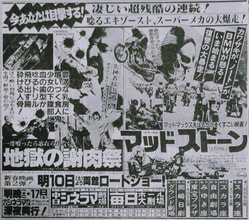
Double Feature Movie Promotional Advertisement - MadStone and Cannibal Apocalypse 1981.
|
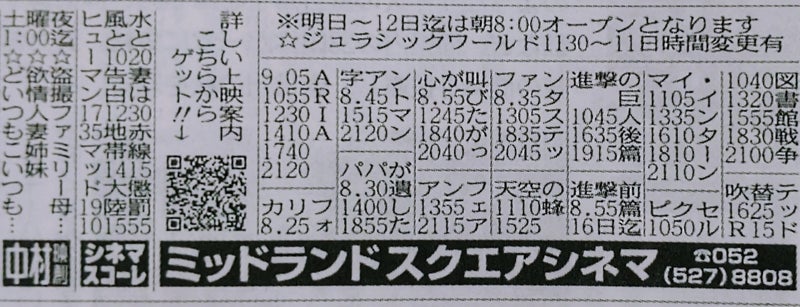
Cinema Newspaper Screening Program - Mad Stone, Raiders Of The Lost Ark and Mad Max 1981.
|
MadStone aired on Japanese television on Monday 26 July 1982 and released on VHS n 1987.
MadStone was re-released in Tokyo Japan at Cinemart Shinjuku and Cinemart Shinsaibashi, 8.40pm on Saturday 26th September - 06th October 2015. A 30 minute forum was held prior to the showing of the movie between Macleod Shiraishi (Kings Records Representative) and Hugh Keays-Byrne at Cinemart Shinjuku. This was to coincide with the release of Mad Max Fury Road on Saturday 20th June 2015.
MadStone was re-released in Tokyo Japan at Cinemart Shinjuku and Cinemart Shinsaibashi, 8.40pm on Saturday 26th September - 06th October 2015. A 30 minute forum was held prior to the showing of the movie between Macleod Shiraishi (Kings Records Representative) and Hugh Keays-Byrne at Cinemart Shinjuku. This was to coincide with the release of Mad Max Fury Road on Saturday 20th June 2015.
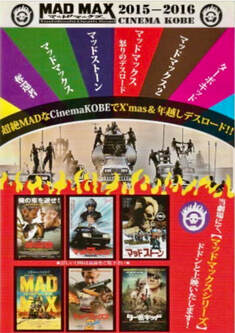
Promotional poster for a special screening event for the Mad Max film series held at the Cinema Kobe for Christmas and the New Year's Period 2015 - 2016. The event was titled 'Super Mad Christmas and New Years Eve Death Road at Cinema Kobe', featuring a marathon of iconic related cult films:
- Stone - 1974
- Mad Max - 1979
- Mad Max 2 Road Warrior - 1981
- Mad Max Fury Road - 2015
- Turbo Kid - 2015.
Stone was not imported into Japan in 1974; however, after the success of Mad Max in 1979, Stone was released in Japan as MadStone in 1981.
In Japan MadStone was treated unfairly on its release as promotion of the movie was heavily referenced to the success of Mad Max. Patrons that went to see the movie expected a sequel or a relationship between Mad Max and MadStone. Monday Road Show stated 'the audience who went to see it were expecting the excitement of Mad Max; however, were stunned and upset and many people were angry of the completely different content'.
In Japan MadStone was treated unfairly on its release as promotion of the movie was heavily referenced to the success of Mad Max. Patrons that went to see the movie expected a sequel or a relationship between Mad Max and MadStone. Monday Road Show stated 'the audience who went to see it were expecting the excitement of Mad Max; however, were stunned and upset and many people were angry of the completely different content'.
When Japanese viewers went to theatres in February 1981, they expected a high octane, stunt heavy action film like Mad Max due to the deceptive advertising title, MadStone. Instead, they were met with a mix of surprise, mild disappointment and unexpected fascination, as the film turned out to be a slow burn, atmospheric mystery about a detective infiltrating a counter culture biker community. Audiences hoping for non stop explosions and car chases were caught off guard by a dialogue driven, philosophical story, but the true shock came from the double feature billing. Paired with the hyper violent Italian horror film Cannibal Apocalypse, moviegoers who bought a ticket found themselves trapped between a gritty Australian drama and an incredibly gory, stomach churning zombie flick. This jarring combination left a deeply traumatic, yet completely unforgettable impression on 1980s Japanese cinema audiences.
When the film was remastered and re-released in Japanese theatres 34 years later for the Gravedigger Blu Ray Edition, user reactions completely shifted as modern audiences looked past the original deceptive marketing to view the film through a historical lens. The biggest wave of enthusiasm came from Japanese motorcycle fans and vintage bike enthusiasts, who praised the raw authenticity of the machinery, particularly the classic Kawasaki Z1 and Z900 models. Modern reviews on Japanese cinema platforms like Filmarks heavily focused on the realistic exhaust notes and the massive, synchronized funeral procession featuring hundreds of real riders, cementing the movie as a holy grail for biker culture. Audiences thoroughly enjoyed validating the film's Mad Max ancestry. Seeing iconic actors like Hugh Keays-Byrne and Vincent Gil sharing the screen years before their legendary roles felt like discovering a sacred text, with many fans celebrating the film as the ultimate Mad Max Episode 0.
When the film was remastered and re-released in Japanese theatres 34 years later for the Gravedigger Blu Ray Edition, user reactions completely shifted as modern audiences looked past the original deceptive marketing to view the film through a historical lens. The biggest wave of enthusiasm came from Japanese motorcycle fans and vintage bike enthusiasts, who praised the raw authenticity of the machinery, particularly the classic Kawasaki Z1 and Z900 models. Modern reviews on Japanese cinema platforms like Filmarks heavily focused on the realistic exhaust notes and the massive, synchronized funeral procession featuring hundreds of real riders, cementing the movie as a holy grail for biker culture. Audiences thoroughly enjoyed validating the film's Mad Max ancestry. Seeing iconic actors like Hugh Keays-Byrne and Vincent Gil sharing the screen years before their legendary roles felt like discovering a sacred text, with many fans celebrating the film as the ultimate Mad Max Episode 0.
The absolute highlight of the film is the Kawasaki Z1. Enthusiast biker blogs like You Will Bike, note that seeing a massive, lawless gang exclusively riding Japanese heavy machinery was a revolutionary visual for young Japanese riders in the late 1970s and early 1980s. While Western outlaw groups traditionally rode Harley Davidson, seeing the iconic Kawasaki DOHC inline four air cooled engines weaponised by a gritty, real world gang felt incredibly validating. Bloggers also frequently spoke about the audio quality, highlighting how MadStone bypassed generic sound effects to capture the authentic, deep Z-sound. One writer noted that the massive 150 bike funeral procession scene gives viewers goosebumps because the overlapping roar of the vintage engines sounds identical to modern Japanese Z-meetings (annual gatherings of vintage Kawasaki owners). True to Japanese automotive blog culture, writers on platforms like Minkara also enjoy dissecting precise technical details; while many domestic riders grew up coveting the Z2 due to Japan's 750cc displacement caps, the movie showcased the unrestricted, full-power 903cc export Z1 models in their natural habitat, ultimately fueling a massive historical desire to import the Z1 back into Japan.
The physical impact of the movie on Japanese customisation culture remains highly evident across parts manufacturer blogs, where specific styling cues from the film are still celebrated today. The massive, bubble style front fairings worn by the Gravediggers' bikes became iconically known in Japan as the "Stone Fairing. Demonstrating the film's lasting legacy, major vintage parts manufacturers like the Doremi Collection continue to manufacture retro replica fairings based exactly on the ones seen in the movie. Today, modern Japanese customizers frequently purchase these specialized kits to modify neo-classic motorcycles, such as the popular Kawasaki Z900RS, transforming them into faithful tributes to the machines featured in the 1974 film.
The physical impact of the movie on Japanese customisation culture remains highly evident across parts manufacturer blogs, where specific styling cues from the film are still celebrated today. The massive, bubble style front fairings worn by the Gravediggers' bikes became iconically known in Japan as the "Stone Fairing. Demonstrating the film's lasting legacy, major vintage parts manufacturers like the Doremi Collection continue to manufacture retro replica fairings based exactly on the ones seen in the movie. Today, modern Japanese customizers frequently purchase these specialized kits to modify neo-classic motorcycles, such as the popular Kawasaki Z900RS, transforming them into faithful tributes to the machines featured in the 1974 film.
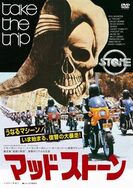
King Records released MadStone on DVD and Blu Ray in Japan on Wednesday 14th October, 2015.
|
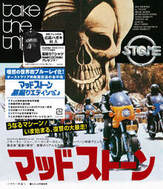
The Blu Ray included bonus footage such as the making of and pre-filming test footage, as well as the documentary 'MadStone Forever' and was released as a 'Grave Digger Edition'.
|
MadStone Grave Diggers Blu Ray Edition
King Records marketed Stone alongside other famously B grades movies during its 2019 - 2020 release lineup, under the title Mad Stone: Gravedigger Edition. In promotional material, Stone was highlighted right beside other absolute companion pieces of madness, such as William Friedkin's To Live and Die in L.A., and the explosive 1973 psycho cop thriller Mad Bomber. When King Records prepared the premium Blu-Ray Grave Digger Edition for their annual budget cinema lineup, they chose this title for a few specific reasons:
a. While the DVD was released as a standard edition, the Blu-Ray was packed with extensive physical packaging perks, behind the scenes featurettes and the 62 minute retrospective documentary 'Stone Forever'. Rebranding it as the Gravedigger Edition made the premium option immediately distinct.
b. In the localised Japanese TV broadcast dub of the movie, the gang's members are assigned distinct, localised names. The Japanese television dub of MadStone (broadcast on TBS's 'Monday Road Show' on 26th July 1982) is famous among international film historians for its extraordinarily creative localisation. Instead of directly transliterating the biker gang's nicknames, the Japanese localisation team leans completely into the theme of the Grave Diggers MC. They retranslated the characters' road names into incredibly vivid, dark and sometimes bizarre localised counterparts. The Grave Digger Edition retains this 1982 distinct flavour.
a. While the DVD was released as a standard edition, the Blu-Ray was packed with extensive physical packaging perks, behind the scenes featurettes and the 62 minute retrospective documentary 'Stone Forever'. Rebranding it as the Gravedigger Edition made the premium option immediately distinct.
b. In the localised Japanese TV broadcast dub of the movie, the gang's members are assigned distinct, localised names. The Japanese television dub of MadStone (broadcast on TBS's 'Monday Road Show' on 26th July 1982) is famous among international film historians for its extraordinarily creative localisation. Instead of directly transliterating the biker gang's nicknames, the Japanese localisation team leans completely into the theme of the Grave Diggers MC. They retranslated the characters' road names into incredibly vivid, dark and sometimes bizarre localised counterparts. The Grave Digger Edition retains this 1982 distinct flavour.
Japanese Rebranding Of The Grave Diggers
The 1980s was an era when Japanese TV dubbing prioritised high energy entertainment over strict, literal translation. To give the outlaw biker gang a distinct flavour, the translators crafted names that sound like a mix of traditional horror folklore and classic Japanese delinquency culture.
- Stone Suton Rock
- Undertaker Sougiya Boss
- Toad Gamma Toad
- Hook Anahori Hole Digger
- Dr Death Shinigami Grim Reaper
- Midnight Ushimitsu The Dead Night
- Septic Baikin Bacteria/ Germ
- Stinkfinger Sukashippee Silent Fart
- Captain Midnight Otsuya The Wake
- Zonk Rariko Junkie/ Druggie.
During the 1980s, Hollywood and international movies on Japanese television were treated as prime time, event driven variety entertainment. Networks like TBS (Tokyo Broadcasting System) weren't just translating the script; they were actively adapting foreign films to maximize entertainment value for domestic audiences. Gritty, hyper violent foreign films (such as 'Ozploitation' cinema) could feel culturally alien or overly aggressive to casual Japanese TV viewers.
Dubbing directors frequently used a technique called Gap Moe juxtaposing a character's terrifying, tough physical appearance with unexpectedly funny, charming, or gentle dialogue. Voice actors were given tremendous creative freedom to ad-lib. If a phrase was trending heavily in Japanese society that week, directors would actively encourage the actors to slip it into the script, regardless of what the original English character actually said.
Dubbing directors frequently used a technique called Gap Moe juxtaposing a character's terrifying, tough physical appearance with unexpectedly funny, charming, or gentle dialogue. Voice actors were given tremendous creative freedom to ad-lib. If a phrase was trending heavily in Japanese society that week, directors would actively encourage the actors to slip it into the script, regardless of what the original English character actually said.
Japanese Male Actors
- Stone - Yahuhara Yoshito
- Undertaker - Masatane Tsukayama
- Toad - Yoshio Nagahori
- Hook - Masaru Futamata
- Dr Death - Kan Tokumanru
- Midnight - Masashi Hirose
- Septic - Yonehiko Kitagawa
- Stinkfinger - Kitagawa Yonehiko
- Captain Midnight - Ikuya Sawaki
- Zonk - Kuzuma Kuwabara.
Dr Slump - Arale Norimaki
The phrase 'Bai-cha!' was not just a random childish sign off; it was arguably one of the biggest pop culture catchphrases in Japan in 1982.The phrase was invented by Akira Toriyama (the creator of Dragon Ball) for his massive hit anime and manga series, Dr. Slump. It was the signature catchphrase of the main character, Arale Norimaki, a hyperactive, robot schoolgirl.
In July 1982, when Stone broadcast on TBS, Dr. Slump was at the absolute peak of its cultural dominance in Japan. The actor voicing Gamma was known for his booming, deep, monstrous voice. Having a hulking, bearded biker character speak with Gouri's terrifyingly deep bass voice, only to casually drop a hyper cute anime catchphrase meant for a little robot girl, was a deliberate, comedic choice designed to make the audience laugh during a tense movie. This casually dropping of a Dr. Slump catchphrase was a deliberate comedic choice by the dubbing team. It created a humorous gap between the bikers frightening appearance and the childishly sweet catchphrase, celebrating the shared pop culture vocabulary of the 1980's.
In July 1982, when Stone broadcast on TBS, Dr. Slump was at the absolute peak of its cultural dominance in Japan. The actor voicing Gamma was known for his booming, deep, monstrous voice. Having a hulking, bearded biker character speak with Gouri's terrifyingly deep bass voice, only to casually drop a hyper cute anime catchphrase meant for a little robot girl, was a deliberate, comedic choice designed to make the audience laugh during a tense movie. This casually dropping of a Dr. Slump catchphrase was a deliberate comedic choice by the dubbing team. It created a humorous gap between the bikers frightening appearance and the childishly sweet catchphrase, celebrating the shared pop culture vocabulary of the 1980's.
Japanese Female Actors
- Takamoku Sanae voiced the character of Vanessa. Played by Australian actress Rebecca Gilling
- Tsukada Emiko voiced the character of Tart (No-Pan) translated as 'No Panties'. Played by Australian actress Susan Lloyd
- Shibata Kiyoko voiced the character of Amanda. Played by Australian actress Helen Morse.
In the original film, Vanessa represents mainstream society trying to pull the undercover cop, Stone, away from the biker gang. She is highly critical of the Gravediggers' lifestyle; however, Takamoku's performance emphasised distress and elegant worry rather than the sharp, confrontational nature seen in Gilling's performance. The Japanese script rephrased her arguments from 'disgust for the bikers' to an 'anxious plea for her partner's safety.' This adjusted the character's dynamic from an independent, frustrated modern woman to a more traditional 'worried woman waiting at home.'
While Susan Lloyd played Tart with a gritty, unpolished biker babe attitude, Tsukada’s delivery leaned closer to a submissive, provocative 1980s Japanese female archetype. The heavy handed swearing and explicit casual sexual references from the original script were heavily toned down or replaced with softer, playful euphemisms to satisfy broadcasting standards.
Amanda (Helen Morse) is a sophisticated, upper class woman who is drawn to the dangerous, raw energy of the Gravediggers, particularly the gang leader, Undertaker. The Japanese script deliberately heightened the linguistic contrast between her and the gang. While the original English uses relatively casual dialogue, Shibata used highly polite, refined and distinctly feminine Japanese pronouns and sentence endings (O-jousama style speech). This exaggerated formatting made her look significantly more out of place when interacting with the rough talking bikers, intensifying the forbidden romance theme for the Japanese audience.
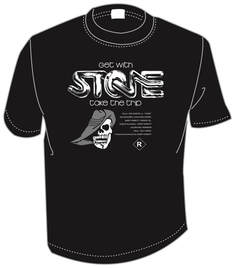
Grave Digger T-Shirt Giveaway.
'Twenty lucky winners selected from applicants will receive a completely non-commercial Japanese original MadStone Grave Diggers t-shirt made by Macleod Co. The design features the Grave Diggers mark from the film... while this won't make you a member of the Grave Diggers, this MadStone t-shirt is super rare'.
'Twenty lucky winners selected from applicants will receive a completely non-commercial Japanese original MadStone Grave Diggers t-shirt made by Macleod Co. The design features the Grave Diggers mark from the film... while this won't make you a member of the Grave Diggers, this MadStone t-shirt is super rare'.
To support the promotion of MadStone on Blu Ray, Sandy Harbutt gave approval to Kings Records who sought Tomokiyo Shiraishi's assistance to design and produce 20 limited edition medium size t-shirts that were not to be sold but allocated to Blu Ray purchases through a lottery.
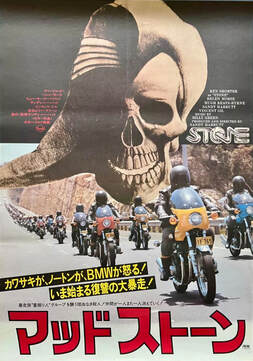
'Kawasaki, Norton, BMW are angry. The rampage of revenge begins now'. 1981.
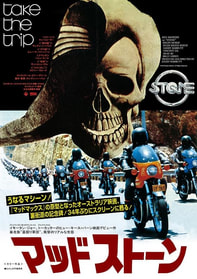
'Roaring Machine. The film that inspired Mad Max. Backstreet momentum returns to the big screen for the first time in 34 years'. 2015.
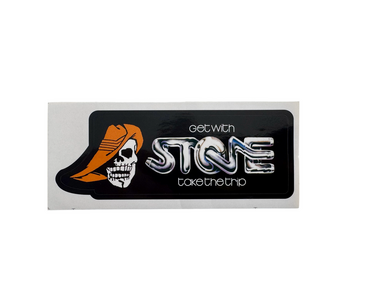
Promotional Movie Sticker Issued With Ticket Purchase At Japanese Screening 2015
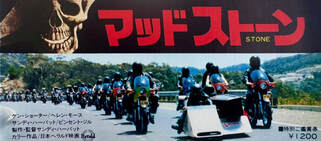
MadStone Movie Screening Ticket 2015
'We will be giving away stickers to those who watch MadStone, on a first come, first serve basis. Those who have seen MadStone and Turbo Kid will receive a non sale poster on a first come, first serve basis. To get the set of the two posters, please present your ticket stubs for both films at the reception desk'.
Sticker designed by Tomokiyo Shiraishi. MadStone screened at the Rissei Cinema, located on the 3rd floor of a wooden school building built in Showa 2.
MadStone and Turbo Kid screened at 6:40pm everyday from Saturday 7th November - Friday 13th November 2015 at the Rissei.
Sticker designed by Tomokiyo Shiraishi. MadStone screened at the Rissei Cinema, located on the 3rd floor of a wooden school building built in Showa 2.
MadStone and Turbo Kid screened at 6:40pm everyday from Saturday 7th November - Friday 13th November 2015 at the Rissei.
The Final Ending
While the physical choreography of the beating remains identical between countries, the theatrical presentation and the 1982 Zack Promotion television edit create vastly different viewing experiences.
In the standard Australian cut, the climax reaches a boiling point after Stone stops the Gravediggers from executing the political assassin, choosing instead to preserve the rule of law. The final scene is gritty, raw and deliberately anti climactic. As Stone lies on the floor with his teeth smashed in, he desperately mumbles to his frantically weeping girlfriend 'No Cops, No Cops' He is a broken man who realised too late that he grew genuinely fond of the outlaws, but completely shattered their sacred trust. The film ends on a cold, unceremonious note as the gang casually packs up and rides away into the night, leaving a bloody Stone behind on the dirt floor.
When the movie was imported to Japan in 1981 and edited for television in 1982, the presentation of this beating scene shifted dramatically to fit the expectations of Japanese action film fans. In the Japanese localisation, the context of the beating changes from a messy counter culture fallout to a formalised, dishonourable betrayal. Because the script heavily leaned into 1980s Japanese delinquent subculture terminology, the gang's assault on Stone is framed less like a random, alcohol fuelled biker riot and more like a structured punishment for violating a blood pact and code of honour. While the original Australian scene relies on realistic, low fidelity grunts, thuds and Vanessa’s background screaming, the Japanese Zack Promotion TV dub dramatically altered the soundscape. The impact sounds of the punches and kicks were amplified using over the top, classic 1980s cinematic martial arts audio effects. The 1982 TBS 'Monday Road Show' broadcast was heavily compressed into a tight 70 minute net runtime, the agonisingly long aftermath of the beating was trimmed. Instead of letting the camera linger on Stone struggling to breathe for an extended period, the Japanese television edit truncated his final gasps, speeding up the transition to the rolling credits over Billy Green's soundtrack to maintain a fast paced action movie momentum.
In the standard Australian cut, the climax reaches a boiling point after Stone stops the Gravediggers from executing the political assassin, choosing instead to preserve the rule of law. The final scene is gritty, raw and deliberately anti climactic. As Stone lies on the floor with his teeth smashed in, he desperately mumbles to his frantically weeping girlfriend 'No Cops, No Cops' He is a broken man who realised too late that he grew genuinely fond of the outlaws, but completely shattered their sacred trust. The film ends on a cold, unceremonious note as the gang casually packs up and rides away into the night, leaving a bloody Stone behind on the dirt floor.
When the movie was imported to Japan in 1981 and edited for television in 1982, the presentation of this beating scene shifted dramatically to fit the expectations of Japanese action film fans. In the Japanese localisation, the context of the beating changes from a messy counter culture fallout to a formalised, dishonourable betrayal. Because the script heavily leaned into 1980s Japanese delinquent subculture terminology, the gang's assault on Stone is framed less like a random, alcohol fuelled biker riot and more like a structured punishment for violating a blood pact and code of honour. While the original Australian scene relies on realistic, low fidelity grunts, thuds and Vanessa’s background screaming, the Japanese Zack Promotion TV dub dramatically altered the soundscape. The impact sounds of the punches and kicks were amplified using over the top, classic 1980s cinematic martial arts audio effects. The 1982 TBS 'Monday Road Show' broadcast was heavily compressed into a tight 70 minute net runtime, the agonisingly long aftermath of the beating was trimmed. Instead of letting the camera linger on Stone struggling to breathe for an extended period, the Japanese television edit truncated his final gasps, speeding up the transition to the rolling credits over Billy Green's soundtrack to maintain a fast paced action movie momentum.
Dubbing and Audio
When TBS bought the broadcast rights to the film, they hired Zack Promotion to completely rebuild the audio track. Zack Promotion hired the scriptwriters and directors who took Australian slang and rephrased it into Japanese subculture equivalent. They operated like a casting agency, hiring the specific voice actors - Takamoku Sanae, Tsukada Emiko and Shibata Kiyoko, to record the new Japanese lines into the movie. When you listen to the Japanese dub on the Grave Diggers Edition , you are listening to a piece of vintage audio history recorded and mixed inside Zack Promotion's Tokyo studios.
The Legend of the Headless Rider 'Kubinashi Rider'.
A Showa-era ghost story influenced by the movie MadStone.
A Showa-era ghost story influenced by the movie MadStone.
The Headless Rider is a generational urban legend that was inspired by real events in Japan and the movie MadStone which began to spread in the late 1970's.
The urban legend originates from an actual accident in which a person annoyed by a biker gang, used a rope stretched across a road as an obstruction; thus, suggesting 'A ghost of a rider who lost his head and died in an motorcycle accident, through piano wire decapitation is said to be wondering the roads at night searching for his head and being overtaken or meeting this rider will cause you to die in a horrific accident'.
The ghost story, is one of Japans most popular urban legends... in addition to MadStone, the television drama 'Kolchak the Crime Reporter' which aired on Nippon Television in 1976, had a titled episode 'The Headless Rider Dancing in the Darkness'.
In 2001 the anime Ghost Stories broadcasted between Sunday 22nd October 2000 - Thursday 15th March 2001 and included an episode in which a headless rider attacked the main characters; thus, perpetuating the urban legend amongst younger generations.
The urban legend originates from an actual accident in which a person annoyed by a biker gang, used a rope stretched across a road as an obstruction; thus, suggesting 'A ghost of a rider who lost his head and died in an motorcycle accident, through piano wire decapitation is said to be wondering the roads at night searching for his head and being overtaken or meeting this rider will cause you to die in a horrific accident'.
The ghost story, is one of Japans most popular urban legends... in addition to MadStone, the television drama 'Kolchak the Crime Reporter' which aired on Nippon Television in 1976, had a titled episode 'The Headless Rider Dancing in the Darkness'.
In 2001 the anime Ghost Stories broadcasted between Sunday 22nd October 2000 - Thursday 15th March 2001 and included an episode in which a headless rider attacked the main characters; thus, perpetuating the urban legend amongst younger generations.
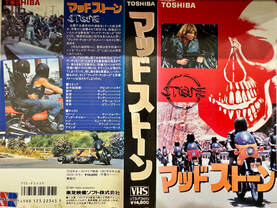
Toshiba Video Software Co, Ltd 1987.
'A politician is shot and killed instantly while giving an anti-pollution speech in a park.
Todd a member of the Grave Diggers motorcycle gang was nearby when the assassin shot him and begins killing the Grave Digger members, one by one.
The police send young detective Stone to the Grave Diggers to investigate three consecutive murders.
Meanwhile the professional assassin lures the Grave Diggers by claiming to be a rival motorcycle gang... who is the mastermind behind the assassinations and will the Grave Diggers and detective Stone be eliminated?'
'A politician is shot and killed instantly while giving an anti-pollution speech in a park.
Todd a member of the Grave Diggers motorcycle gang was nearby when the assassin shot him and begins killing the Grave Digger members, one by one.
The police send young detective Stone to the Grave Diggers to investigate three consecutive murders.
Meanwhile the professional assassin lures the Grave Diggers by claiming to be a rival motorcycle gang... who is the mastermind behind the assassinations and will the Grave Diggers and detective Stone be eliminated?'
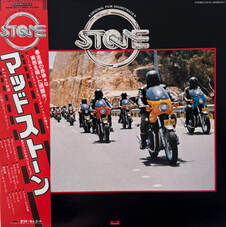
Stone LP Soundtrack PolyDor K.K. Japanese Pressing 1978.
Five years before Mad Max was made, the fire of new violence was blazing in Australia. The piece that makes you feel like your hand is raised is MadStone... in this movie, everyone except for the few main characters are real biker gang members.
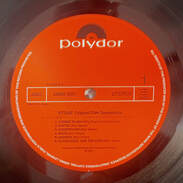
Stone LP Soundtrack. First Japanese Pressing.
|
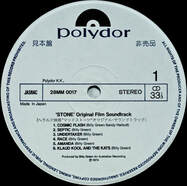
Stone LP Soundtrack. Second Japanese Pressing.
|
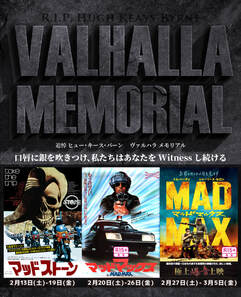
'Valhalla Memorial' special screening event honouring actor Hugh Keays-Byrne, held at Ciné City in Tachikawa from the 13 February - 05 March 2021. The event featured screenings of Mad Stone, the original Mad Max and Mad Max: Fury Road.
'Following the Shin-Bungeiza, Tachikawa Cinema City will also be holding a tribute to Hugh Keays-Byrne, who passed away last December. The first week will feature Madstone, which can be considered Hugh's film debut in Australia. Five years before Mad Max, it's a cult movie featuring numerous Kawasaki motorcycles and depicting the lives of outlaw bikers. Hugh plays a biker who is central to the story. The denim jacket that Hugh wears in the film still exists and was something of a trademark for him, as he even wore it to the LA premiere of Fury Road and it was even displayed at his funeral. Furthermore, the image of the many embroidered patches sewn onto the jacket was directly used to decorate Immortan Joe's armor. Although it will be a Blu-Ray screening, this is one of the few chances to see Madstone on the big screen. Don't miss it!'.
'Following the Shin-Bungeiza, Tachikawa Cinema City will also be holding a tribute to Hugh Keays-Byrne, who passed away last December. The first week will feature Madstone, which can be considered Hugh's film debut in Australia. Five years before Mad Max, it's a cult movie featuring numerous Kawasaki motorcycles and depicting the lives of outlaw bikers. Hugh plays a biker who is central to the story. The denim jacket that Hugh wears in the film still exists and was something of a trademark for him, as he even wore it to the LA premiere of Fury Road and it was even displayed at his funeral. Furthermore, the image of the many embroidered patches sewn onto the jacket was directly used to decorate Immortan Joe's armor. Although it will be a Blu-Ray screening, this is one of the few chances to see Madstone on the big screen. Don't miss it!'.