'When you are on a bike, I mean a big bike, you've got all the power man'.
Sandy sought the assistance of John Laws to narrate the trailer of Stone. John Laws endorsed the film and didn't charge a fee for his services. John is known for his interest in motorsports and motorcycles.
As for the trailer, Sandy hated it, and gave approval for recutting and changing the narration, stating to Scotia International Filmverleih 'if you want to do some recutting or change the narration, please do'
As for the trailer, Sandy hated it, and gave approval for recutting and changing the narration, stating to Scotia International Filmverleih 'if you want to do some recutting or change the narration, please do'
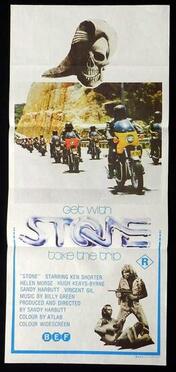
First release day bill poster - 'Get With Stone'. This 1974 poster was released by British Empire Films and was displayed in cinemas and drive ins to advertise the film. The design of this poster is credited to Tom Chantrell and was produced between 1974 - 1979.
Tom Chantrell was born in Manchester, England. During WWII he was a conscientious objector and supported the war effort by designing propaganda posters. After WWII he established a career in cinema advertising and commenced building a reputation designing posters for films like The King and I (1956), One Million Years B.C (1966) and Star Wars (1977). As computer based illustration became popular in the 1980's, Tom Chantrell transitioned into designing cover art for VHS sleeves.
Tom Chantrell was born in Manchester, England. During WWII he was a conscientious objector and supported the war effort by designing propaganda posters. After WWII he established a career in cinema advertising and commenced building a reputation designing posters for films like The King and I (1956), One Million Years B.C (1966) and Star Wars (1977). As computer based illustration became popular in the 1980's, Tom Chantrell transitioned into designing cover art for VHS sleeves.
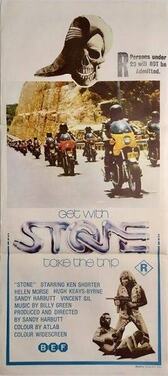
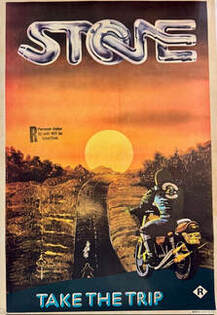
In 1974 the chief censor prohibited the release of Stone in New Zealand. In 1975 it passed an appeals board and was given an R rating and age restriction limit of 20 years. The New Zealand day bill poster has been stamped 'persons under 20 years will not be permitted'.
Stone Runs Into Strife In Shaky Isles.
If you think we've got censorship problems, consider the case of the Australian movie and its efforts to be screened in New Zealand. Stone you may recall, was a film made in Sydney about a bikie gang and their confrontations with straight society. It was released in Sydney in 1974, did splendidly at the box office and was generally well received by critics, but not in New Zealand. The man behind the movie, Sandy Harbutt, has battled for a year to have it screened in the Shaky Isles. It was originally passed by the censors, then the police objected on the grounds that it gave bikie gangs too strong an identification. It appears bikie gangs are operating to successfully in New Zealand and do not need any encouragement.
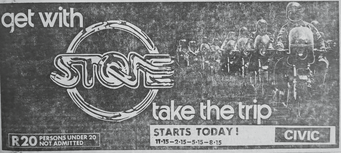
The film finally went to the cabinet. The Prime Minister, Mr Robert Muldoon and several of his ministers saw the film - which would be a reasonable way of spending a wet afternoon in Wellington. A few more cuts were ordered and this week Stone will finally be seen by New Zealand. Stone stars Sandy Harbutt, Ken Shorter and Helen Morse. Daily Mirror Tuesday 07 September 1976.
By The Boot Survival.
VRRR.... 0000MMM. The high-pitched whine of a Kawasaki 900 fills the theatre. Ooot. mokkk goes the musical score as the police appear on the screen. The theatre is full of bikies and they're loving it. The flim, of course. is "Stone", a picture about a bikie gang that is written, directed and acted by a man who is something of a bikie himself - Australian Sandy Harbutt, who plays the Undertaker. A catchy picture. running half an hour longer than it need. "Stone" is nevertheless polished and highly entertaining. A magnetic piece of social documentation that tells a darn good story and it is only by chance that we have it here at all. A censorship debate lasting 12 months has kept "Stone" oft New Zealand screens since its Australian release in 1974. Harbutt originally objected to cuts made to the film (a beheading and some bad language) but later heard the police were appealing against the release. He decided it was time "Stone" was brought out of the closet. It has he claims. a particular message to make to a repressive society. "Stone" is undoubtedly a violent film — as any picture about a minority group living on the edge of society and surviving "by the boot must be." But it's more than just a sociological study, and it reeks of the real thing - dirt sweat and blood. Throughout the filming, actors and crew worked alongside real bikie gangs. taking tips and using them in some scenes. "Stone" then, not only appears authentic, but is a serious attempt to give some insight into the bikie way of life. Briefly, the film opens on the assassination of a political figure at a Sydney rally. The Gravediggers presence is noted and in the following scenes three gang members are brutally murdered (the first, a beheading, has been cut completely). Stone, an undercover detective joins the gang to try to solve the murders. The core of the film ties in his growing understanding of the Gravediggers' philosophy. He is, if you like, the filter through which we gauge their life style. "Everybody wants to kill those bastards", a shop owner tells Stone, "But they've got a bit of class. them outlaws. they keep their bikes well and they know how to move". "Stone" makes little or no attempt to glorify the bikies' lifestyle, but there is a rough affection for their antics that makes their outrage at the murders and desire for revenge, in terms of their code of honour, all the more explicable. For this reason, legitimate criticism can be made of the removal of the bikie beheading scene at the beginning of the film, its absence reduces the justification for the Gravediggers later actions. But for all that. "Stone" is still a brutal film and one that makes no attempt to condone the thuggery of gang members or violence in general. Perhaps more important, it is an inarticulate fun and that is ultimately where its success lies. "Stone" offers little talk. but it makes itself understood in bikie language - action - and it scores points for not coming down too heavily on either side of the law. With admirable performances from Harbutt as the Undertaker, Ken Shorter as Stone, and Helen Morse as Stone's girlfriend, the film is brave call for tolerance and understanding of bikies. Its failures are those of society - the inability to give us a happy ending, to create some kind of dialogue between the law and the outlaws. Stone comes away with some understanding, but the bikies do not. Still, maybe the former is all that is needed. "Stone" is showing at the Rings with an R20 certificate. New Zealand Stone Review 1976.
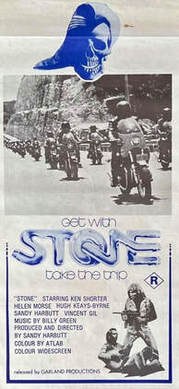
In 1979 Hedon Productions re-submitted the film to the Australian Classification Board, with the film being re-released in a new amended version on 01st November 1979. Garland Productions managed the distribution between 1982 - 1984. This day bill poster release has inscribed 'released by Garland Productions'.
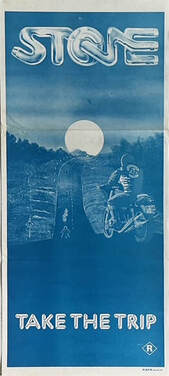
First release day bill poster - 'Take The Trip'. This poster was released by Hedon Productions as the film was self distributed by them from Friday 01st November 1979. This poster is a one colour replicate of the colour painting Peter Ledger painted in 1974. A dark and light style was produced during its production run with minor amendments to design. The light blue day bill poster was designed first to replicate similarities of the original colour reproduction one sheet; thus, realigning the R under the phrase 'Take The Trip' to accommodate the size differences from one sheet to day bill.
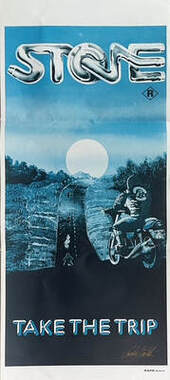
Second release day bill poster - 'Take The Trip'. The second amendments were made to the depth of shade and the new placing of the R under the logo Stone, permitting the phrase 'Take The Trip' to be an eye catching headline. This poster was produced between 1980 - 1982. In 1985 a day bill poster cost 0.60 cents to produce.
This is the final scene in the movie with all the Grave Diggers riding into the sunset, 'the sunset shot' as stated by Sandy. This scene was filmed in 1973 East of Cobar at Nyngan, NSW.
The Grave Diggers stopped overnight at the Royal Hotel in Dubbo, meeting an Outlaw Club for drinks and watching the movie 'Zulu' at the Dubbo Drive In. That evening Sandy departed the Drive In early, to enable an early rise for location scouting. Sandy states'the highway runs behind the Drive-In, so as I headed back to the pub, I lined up the Kawasaki and pulled a wheelie for the troops... Ferret thought this was a good idea, so rode out and did the same; however, the constabulary had observed me leaving and waited for Ferret. They busted him and he only stayed out of the cooler because he convinced them he was a movie star and not a bikie'.
The Grave Diggers stopped overnight at the Royal Hotel in Dubbo, meeting an Outlaw Club for drinks and watching the movie 'Zulu' at the Dubbo Drive In. That evening Sandy departed the Drive In early, to enable an early rise for location scouting. Sandy states'the highway runs behind the Drive-In, so as I headed back to the pub, I lined up the Kawasaki and pulled a wheelie for the troops... Ferret thought this was a good idea, so rode out and did the same; however, the constabulary had observed me leaving and waited for Ferret. They busted him and he only stayed out of the cooler because he convinced them he was a movie star and not a bikie'.
This 'Take The Trip' one sheet is a reproduction from artist Peter Ledger, who painted this image on canvas in 1974. This one sheet is the coloured 'Take The Trip' poster released by Hedon Productions between 1980 - 1982 and has become the definitive image of Stone. This one sheet started to be released for public viewing with the day bill posters for the drive ins and cinemas in the 80's. In 1985 a colour one sheet poster cost $3.50 to produce.
For the Whitsunday Drive In Theatre between Sunday 10th - Monday 11th February 1985, 4 one sheets were produced at a cost of $3.50 each and 6 day bill posters were produced at a cost of 0.60 cents each.
Sandy produced day bill posters and one sheets as required, e.g. Hanview Drive In, Hanwood NSW on Sunday 02nd December 1984, 10 day bill posters were printed at a cost of 60 cents each and for the Ayr Drive In QLD, Sunday 03rd March 1985, 4 day bill posters and 2 one sheets were printed at a cost of $9.40 and Charter Towers Drive in QLD, 2 one sheets and 5 day bill posters were printed at a total cost of $10.00.
M.A.P.S. Litho Pty Ltd. or Mailing and Print Services, was an Australian printing company located in Sydney. It was started in 1967 by David Seton, the son of Poster artist Babs McDougall, who worked for Robert Burton of Burton Printers. The company was de-registered in 2009; however, their movie poster printing had ceased by the late 1980s.
For the Whitsunday Drive In Theatre between Sunday 10th - Monday 11th February 1985, 4 one sheets were produced at a cost of $3.50 each and 6 day bill posters were produced at a cost of 0.60 cents each.
Sandy produced day bill posters and one sheets as required, e.g. Hanview Drive In, Hanwood NSW on Sunday 02nd December 1984, 10 day bill posters were printed at a cost of 60 cents each and for the Ayr Drive In QLD, Sunday 03rd March 1985, 4 day bill posters and 2 one sheets were printed at a cost of $9.40 and Charter Towers Drive in QLD, 2 one sheets and 5 day bill posters were printed at a total cost of $10.00.
M.A.P.S. Litho Pty Ltd. or Mailing and Print Services, was an Australian printing company located in Sydney. It was started in 1967 by David Seton, the son of Poster artist Babs McDougall, who worked for Robert Burton of Burton Printers. The company was de-registered in 2009; however, their movie poster printing had ceased by the late 1980s.

The Stone 'tube' artwork was designed by comic artist Peter Ledger and airbrushed by Errol Black. Peter Ledger was an Australian cartoonist, comic book artist, commercial airbrush artist and illustrator. The 'Ledger Awards' named in honour of Peters contribution to comics are awarded for 'excellence in Australian comic art, illustration and publishing', it is presented in Victoria's State Library on the eve before the Melbourne Supernova Convention.
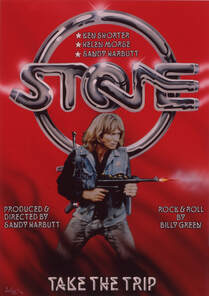
This poster is a piece of commercial graphic art that combines multiple techniques. Peter Ledgers signature is visible in the bottom left corner of the artwork. Peter Ledger used mixed media to create this movie poster, physically layering photographic prints with airbrushing and hand drawn lettering to produce a single master design.
Stone LP Soundtrack, 1974. Warner Bros. Records, 6000.002.
Billy Green Australian Pressing.
Billy Green Australian Pressing.
The early history of Warner Bros. Records in Australia began in August 1960, nearly two years after its USA founding. Initially the label did not have a direct presence in Australia and relied on licensing and local manufacturing agreements. For the first decade(1960-1970) Warner Bros functioned through external Australian partners rather than as a standalone entity. Records were manufactured and distributed by the Australian Record Company. Warner Bros. officially launched its own Australian operation on the 1st October 1970 based in Sydney. The primary difference between LP labels for the soundtrack of the 1974 Australian film Stone lies in the specific Warner Bros. design used during its initial release and subsequent repressing. While most international artists on Warner Bros. transitioned to the "Burbank" palm tree label in mid-1973, local Australian acts like Stone LP continued using the older green design for several years.
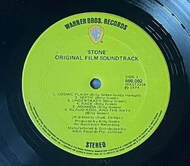
Stone LP Soundtrack.
First Australian Pressing. The first Australian release (Catalog Number 6000.02) features the classic dark green Warner Bros. label. |
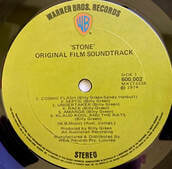
Stone LP Soundtrack. First Australian Pressing. The presence of both a dark green and light green Warner Bros. label for the 1974 Stone soundtrack is common for Australian Warner Bros. pressings from this era. These are generally considered concurrent variations rather than distinctly different releases. |
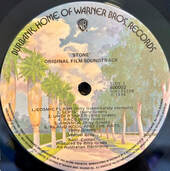
Stone LP Soundtrack.
Second Australian Pressing. Australian signed acts generally did not use the Burbank label design until 1975. |
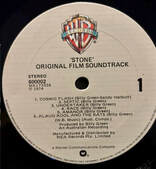
Stone LP Soundtrack.
Third Australian Pressing. By 1978 the standard retail label for all Warner Bros. releases changed from the "Burbank" palm trees to a cream or off-white background. |
Billy Greens partner at the time Isabel Morse was the sister of Helen Morse who was married to Sandy. Sandy sought Billy's assistance to record the soundtrack. The music score took twelve months to write and Billy also played '69' in the movie Stone. Sandy wrote the lyrics to 'Cosmic Flash', taking inspiration from the American Band 'Sly and the Family Stone', with Billy rendering it with a classic rock quality.
Guitarist Billy Green first met Sandy Harbutt in Melbourne in 1970 when he was living with Helen Morse's sister Isabel, who played violin in the Melbourne symphony. Green was surrounded by some of the city's best musicians and as a key player and writer in the successful Aussie rock group 'Doug Parkinson In Focus'. Sandy soon became part of the initiated bands touring entourage and gained first hand experience of the rock n roll lifestyle, with a second hand pass to Billy's huge knowledge of music. Sandy stated 'In Focus were the ultimate art rock band and Billy turned me on to all the music he was listening to from Ravi Shankar 10 John McLaughin'. It was Billy's unwaning desire to create music quite unlike anything heard before in Australia that spurred Sandy to secure Billy and his very own custom built band to provide the score for Stone. Many of the unorthodox techniques used for the Stone score broke new boundaries for Australian pop music and the format of a soundtrack LP provided Billy's new ensemble with the chance to create an LP more akin to a concept album as opposed to a bunch of chart topping 45s.
One of the key methods deployed to retain this veritable structure came from Billy's initial conceptual idea of giving each member of the Gravediggers their own individual theme tunes which he would develop using his expanded group of instrumentalists at Melbourne's TCS Studio. Billy and Sandy decided at an early stage to assign different instruments to the key members of the Gravediggers that resulted in a track list that read more like a cast list. English born Hugh Keays-Byrne's 'Toad' was given a regal European marching band aesthetic, featuring a French horn played by Alex Grieve, a respected brass multi instrumentalist who still played with the Stonnington Symphony. Sandy's Undertaker was given a bass driven blues track played by Barry 'Big Goose' Sullivan, a hugely respected pop player (akin to an Australian Herbie Flowers) who originally came from the Aussie blues-rock combo Chain before playing with The Wild Cherries and Rennee Geyer.
Sandy's sister in law, Isabel Morse was joined by Romano Crivici for the track Amanda which incorporates viola and violin into a brooding funk rock track with multi layered oriental orchestral textures courtesy of jazz composer and Sydney Symphony Orchestra's Peter Jones. For one of the most striking tracks on the LP, Peter who had already arranged music for early Ozploitation classics such as 'The Adventures Of Barry McKenzie' and 'Alvin Purple', was paired with the contrasting rock drummer Graham Morgan who was at the time working alongside Billy on new In Focus material for singer Doug Parkinson. Doctor Death also steals one of the LPs finest moments with his own tragic death theme utilising an electric harpsichord leaving the solo guitar based theme for Ken Shorter's lead character Stone, in which acoustic chords develop into a wash of indulgent electric axe mastery played by Billy himself, while Sceptic is culturally typified by a funky banjo. The banjo was played by ex-Thunderbird's guitarist Charles Gauld who would later become guitarist and arranger for Brian May (Mad Max score composer). Having assembled the framework of the films soundtrack, it would only take a bunch of short incidental cues and a couple of crowd pleasing vocal tracks, which would be sung by the established and beloved Doug Parkinson before a potential LP could hit the racks to co-promote the first ever Australian bikie film.
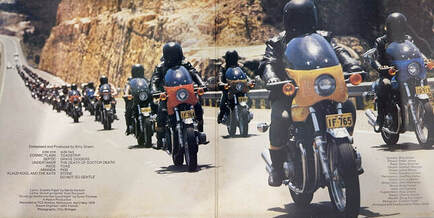
It was not surprising that Harbutt would also have strong ideas about any lyrical content that went in to the score and found himself penning lyrics to the song Cosmic Flash - the song that Doug Parkinson would sing following the classic 400 bike strong funeral procession scene that adored the inside of the original gatefold sleeve (the recorded 400 riders was a result of an over subscribed response to a one off advertisement in Revs motorcycle magazine). Sandy wrote the lyrics to Cosmic Flash while listening to Sly And The Family Stone; however, when Billy wrote the music he didn't do a funk rhythm but followed what Barry Sullivan was doing on bass. For the second vocal track Sandy asked Billy if he could set the poetry of Dylan Thomas to a modern composition resulting in a full tilt rock adaptation of 'Do Not Go Gentle Into That Good Night' alternatively titled 'Rage Song'. Billy would originally rehearse the song with Doug Parkinson In Focus who even performed an embryonic and inspiring version on the televised Australian Music Awards. By the time the soundtrack recording commenced it was obvious that Doug was the best man for the job.
Simultaneously to the Stone recordings Billy was also working on recording the debut LP for Jeannie Lewis for which she also recorded her own version of Rage. Here lies one of the first unaccredited mysteries in the Stone soundtrack saga revealing the source of the female vocal that accompanies the films opening scene depicting a shot of Captains Cooks monument from 1770.
Sandy stated 'I was mixing the picture at United Sound Studios when Billy came up with the concept of the female voice, so he called Jeannie. She came in, Billy and her ducked into a small upstairs studio and Jeannie improvised the vocals'. The vocal arrangement sat in the can under the title 'Botany Bay Blues' until it was finally retitled 'Eco Blue' for Stones 25th Anniversary in 1999.
Guitarist Billy Green first met Sandy Harbutt in Melbourne in 1970 when he was living with Helen Morse's sister Isabel, who played violin in the Melbourne symphony. Green was surrounded by some of the city's best musicians and as a key player and writer in the successful Aussie rock group 'Doug Parkinson In Focus'. Sandy soon became part of the initiated bands touring entourage and gained first hand experience of the rock n roll lifestyle, with a second hand pass to Billy's huge knowledge of music. Sandy stated 'In Focus were the ultimate art rock band and Billy turned me on to all the music he was listening to from Ravi Shankar 10 John McLaughin'. It was Billy's unwaning desire to create music quite unlike anything heard before in Australia that spurred Sandy to secure Billy and his very own custom built band to provide the score for Stone. Many of the unorthodox techniques used for the Stone score broke new boundaries for Australian pop music and the format of a soundtrack LP provided Billy's new ensemble with the chance to create an LP more akin to a concept album as opposed to a bunch of chart topping 45s.
One of the key methods deployed to retain this veritable structure came from Billy's initial conceptual idea of giving each member of the Gravediggers their own individual theme tunes which he would develop using his expanded group of instrumentalists at Melbourne's TCS Studio. Billy and Sandy decided at an early stage to assign different instruments to the key members of the Gravediggers that resulted in a track list that read more like a cast list. English born Hugh Keays-Byrne's 'Toad' was given a regal European marching band aesthetic, featuring a French horn played by Alex Grieve, a respected brass multi instrumentalist who still played with the Stonnington Symphony. Sandy's Undertaker was given a bass driven blues track played by Barry 'Big Goose' Sullivan, a hugely respected pop player (akin to an Australian Herbie Flowers) who originally came from the Aussie blues-rock combo Chain before playing with The Wild Cherries and Rennee Geyer.
Sandy's sister in law, Isabel Morse was joined by Romano Crivici for the track Amanda which incorporates viola and violin into a brooding funk rock track with multi layered oriental orchestral textures courtesy of jazz composer and Sydney Symphony Orchestra's Peter Jones. For one of the most striking tracks on the LP, Peter who had already arranged music for early Ozploitation classics such as 'The Adventures Of Barry McKenzie' and 'Alvin Purple', was paired with the contrasting rock drummer Graham Morgan who was at the time working alongside Billy on new In Focus material for singer Doug Parkinson. Doctor Death also steals one of the LPs finest moments with his own tragic death theme utilising an electric harpsichord leaving the solo guitar based theme for Ken Shorter's lead character Stone, in which acoustic chords develop into a wash of indulgent electric axe mastery played by Billy himself, while Sceptic is culturally typified by a funky banjo. The banjo was played by ex-Thunderbird's guitarist Charles Gauld who would later become guitarist and arranger for Brian May (Mad Max score composer). Having assembled the framework of the films soundtrack, it would only take a bunch of short incidental cues and a couple of crowd pleasing vocal tracks, which would be sung by the established and beloved Doug Parkinson before a potential LP could hit the racks to co-promote the first ever Australian bikie film.
It was not surprising that Harbutt would also have strong ideas about any lyrical content that went in to the score and found himself penning lyrics to the song Cosmic Flash - the song that Doug Parkinson would sing following the classic 400 bike strong funeral procession scene that adored the inside of the original gatefold sleeve (the recorded 400 riders was a result of an over subscribed response to a one off advertisement in Revs motorcycle magazine). Sandy wrote the lyrics to Cosmic Flash while listening to Sly And The Family Stone; however, when Billy wrote the music he didn't do a funk rhythm but followed what Barry Sullivan was doing on bass. For the second vocal track Sandy asked Billy if he could set the poetry of Dylan Thomas to a modern composition resulting in a full tilt rock adaptation of 'Do Not Go Gentle Into That Good Night' alternatively titled 'Rage Song'. Billy would originally rehearse the song with Doug Parkinson In Focus who even performed an embryonic and inspiring version on the televised Australian Music Awards. By the time the soundtrack recording commenced it was obvious that Doug was the best man for the job.
Simultaneously to the Stone recordings Billy was also working on recording the debut LP for Jeannie Lewis for which she also recorded her own version of Rage. Here lies one of the first unaccredited mysteries in the Stone soundtrack saga revealing the source of the female vocal that accompanies the films opening scene depicting a shot of Captains Cooks monument from 1770.
Sandy stated 'I was mixing the picture at United Sound Studios when Billy came up with the concept of the female voice, so he called Jeannie. She came in, Billy and her ducked into a small upstairs studio and Jeannie improvised the vocals'. The vocal arrangement sat in the can under the title 'Botany Bay Blues' until it was finally retitled 'Eco Blue' for Stones 25th Anniversary in 1999.
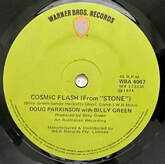
Stone Single EP Cosmic Flash and Klaud Kool and the Kats. Warner Brother Records 1974.
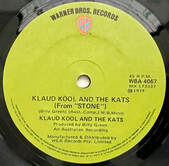
Billy made the decision that all the players would be paid double rates which allowed Sandy and Billy to push the artists to their extremes. 'As we didn't record to picture, Billy had to write the tracks and record them to exact timing... can you believe that Graham Morgan could actually lay down the tracks to exact length - as in exactly 5 minutes, 32 seconds and Billy would use all these whacko times like 7/4 for tracks like Stone's theme' stated Sandy.
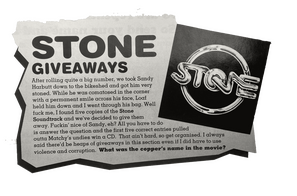
Live To Ride Magazine Stone CD Soundtrack Give Away 1997.
After rolling quite a big number, we took Sandy Harbutt down to the bikeshed and got him very stoned. While he was comatosed in the corner with a permanent smile across his face, Loaf held him down and I went through his bag. Well fuck me, I found five copies of the Stone Soundtrack and we've decided to give them away. Fuckin' nice of Sandy, eh? All you have to do is answer the question and the first five correct entries pulled outta Matchy's undies win a CD. That ain't hard, so get organised. I always said there'd be heaps of giveaways in this section even if I did have to use violence and corruption. What was the copper's name in the movie?
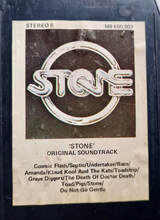
Stone Stereo 8 Track Cassette Original Soundtrack Warner Brothers 1974.
Developed in 1964. This format reached its peak in the late 1960's and 1970's.
Developed in 1964. This format reached its peak in the late 1960's and 1970's.
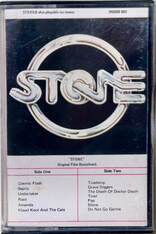
Stone Cassette Soundtrack Warner Brothers 1974. This format peaked from 1983 to 1991.
|
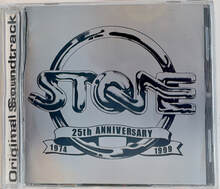
Stone Original Soundtrack '25th Anniversary 1974 - 1999' Compact Disc.
Manufactured and Distributed by Ascension Records. Hedon Productions and V8 Records 1999. |
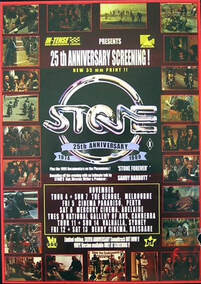
The poster advertises a 1999 screening tour presented by In-Tense Touring, featuring a new 35mm Stone print.
Screenings were held in November 1999 at various Australian venues including The George in Melbourne, Cinema Paradiso in Perth, Mercury Cinema in Adelaide, National Gallery of Australia in Canberra, Valhalla in Sydney, and Dendy Cinema in Brisbane.
The poster promotes a limited edition "Silver Anniversary" soundtrack album by Billy Green, with the vinyl version available only at the screenings.
Screenings were held in November 1999 at various Australian venues including The George in Melbourne, Cinema Paradiso in Perth, Mercury Cinema in Adelaide, National Gallery of Australia in Canberra, Valhalla in Sydney, and Dendy Cinema in Brisbane.
The poster promotes a limited edition "Silver Anniversary" soundtrack album by Billy Green, with the vinyl version available only at the screenings.
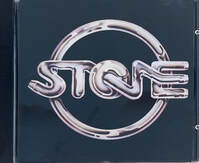
Stone Compact Disc Soundtrack. Hedon Productions 1999.
This format gained popularity in the late 1980's and early 1990's and by 1991 they had surpassed the phonograph record and cassette tape, declining in the 2000's for digital downloads.
This format gained popularity in the late 1980's and early 1990's and by 1991 they had surpassed the phonograph record and cassette tape, declining in the 2000's for digital downloads.
a. ECOBLUE recorded at United Sound Studios, Sydney, June 1974
b. HIPSRAP recorded at The Basement, Sydney, October 1973
c. SMOKE recored at The Casemates Fortress, Obelisk Bay, Sydney, November 1973
d. SWIM recorded underground in the magazine of the Middle Head Fortress, Sydney, November 1973
e. RAGE - Adapted from the poem 'Don't Go Gentle Into That Good Night' by Welsh poet Dylan Thomas.
b. HIPSRAP recorded at The Basement, Sydney, October 1973
c. SMOKE recored at The Casemates Fortress, Obelisk Bay, Sydney, November 1973
d. SWIM recorded underground in the magazine of the Middle Head Fortress, Sydney, November 1973
e. RAGE - Adapted from the poem 'Don't Go Gentle Into That Good Night' by Welsh poet Dylan Thomas.
All other tracks recorded and mixed at TCS Studio, Melbourne, April and May 1974.
Mastered at Sony Music Australia by Wayne Baptist, August 1995, sound engineer was John French and cover photography was by Chic Stringer.
Distribution:
BEF/ GOU 1974 - 1979 (35mm print)
Hedon Productions 1980 - 1982 (35mm print)
Garland Productions 1982 - 1984 (35mm print)
Roadshow Entertainment 1985 - 2000 (Beta, VHS and 35mm print)
Hedon Productions 1994 - 2000 (VHS, DVD, Compact Disc and 35mm print)
Magna Pacific 2000 - 2005 (VHS and DVD)
Umbrella Entertainment & Hedon Productions 2006 - 2025 + (DVD and Blu Ray).
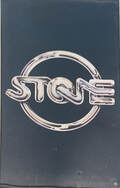
Hedon Productions VHS 'Cast and Crew Version'.
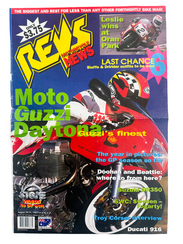
Win A Stone Video REVS News August 1993.
STONE, the classic motorcycle movie from the 70s that has already assumed cult status, is now available on video. REVS, in conjunction with the movie's producers, Headon Productions, now gives you the chance to win your own copy. Not only that, these are one of a kind videos (well, six of a kind) which have been personally autographed by Sandy Harbutt, whom you may better remember as Undertaker from the movie. For the uninitiated, Stone revolves around a motorcycle gang called the Gravediggers and a bike cop, Stone, who rides undercover with the gang. Some of the stunt scenes make Australian film history, not to mention fantastic bike action in their own right. So, you want a personally autographed video? Just answer one simple question: Most of the Gravediggers rode one particular type of machine. What was it? Write your entry (type and model) on the back of a standard envelope, along with your name and address, and send it to: Stone Giveaway, REVS, PO XXX, Alexandria, NSW, 2015. We will draw six winners from all correct entries received by Wednesday, September 1. Winners will be announced in REVS September 15 issue.
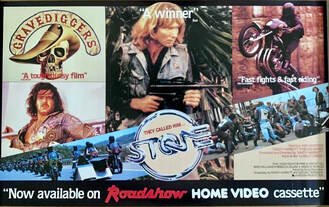
Roadshow Home Video Cassette promotional poster. Displayed in Video Ezy stores.
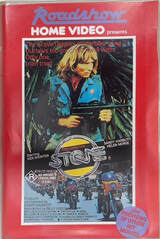
Roadshow VHS 1985.
'This version of Stone was specially prepared by me for the Australian video release' Sandy Harbutt. |
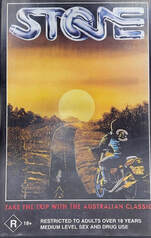
Hedon Productions VHS 1994.
'The movie that has a cult following all over the world. Ride with Stone, the undercover cop who joins the Grave Diggers motorcycle gang to find out who's killing them off. They have there own law... there own satanic religion... no-one is safe with them - not even Stone'. |
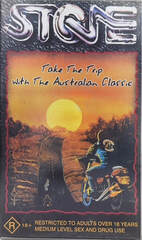
Magna Pacific VHS 2000.
'The best biker movie ever produced...' Live to Ride. |
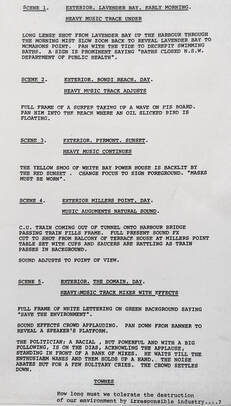
Producer Sandy Harbutt frequently changed the screenplay while filming, sometimes making significant rewrites due to creative decisions, budget or time constraints. This was a common part of the filmmaking process, as the script was considered a blueprint that would evolve based on a variety of factors during production.
Amended Draft and Script Revision.
Amended Draft and Script Revision.
Scene 1.
Exterior Lavender Bay. Early morning.
Heavy music track under long lens shot from Lavender bay up the harbour through the morning mist, slow zoom back to reveal Lavender Bay to McMahons Point. Pan with tide to decrepit swimmers baths.
A sign is prominent saying 'Baths Closed N.S.W. Department of Public Health'.
Scene 2.
Exterior. Bondi Beach day.
Heavy music track adjusts.
Full frame of a surfer taking up a wave on his board.
Pan him into the beach where an oil slicked bird is floating.
Scene 3.
Exterior. Pyrmont. Sunset.
Heavy music continues.
The yellow smog of White Bay power house is backlit by the red sunset .
Change focus to sign foreground. 'Masks Must Be Worn'.
Scene 4.
Exterior. Millers Point. Day.
Music arguments natural sound.
Train coming out of tunnel onto Harbour Bridge, passing train fills frame. Full present Sound FX.
Cut to shot from balcony of terrace house at Millers Point table set with cups and saucers are rattling as train passes in background.
Sound adjusts to point of view.
Scene 5.
Exterior. The Domain. Day.
Heavy music track mixes with effects.
Full frame of white lettering on green background saying 'Save The Environment'.
Sound effects crowd applauding. Pan down from banner to reveal a speaker's platform.
The politician, a racial, but powerful and with a big following, is on the dais, acknowledging the applause, standing in front of a bank of mikes. He waits till the enthusiasm wanes and then holds up a hand... the noise abates but for a few solitary cries, the crowd settles down.
Townes.
'How long must we tolerate the destruction of our environment by irresponsible industry....?'.
Exterior Lavender Bay. Early morning.
Heavy music track under long lens shot from Lavender bay up the harbour through the morning mist, slow zoom back to reveal Lavender Bay to McMahons Point. Pan with tide to decrepit swimmers baths.
A sign is prominent saying 'Baths Closed N.S.W. Department of Public Health'.
Scene 2.
Exterior. Bondi Beach day.
Heavy music track adjusts.
Full frame of a surfer taking up a wave on his board.
Pan him into the beach where an oil slicked bird is floating.
Scene 3.
Exterior. Pyrmont. Sunset.
Heavy music continues.
The yellow smog of White Bay power house is backlit by the red sunset .
Change focus to sign foreground. 'Masks Must Be Worn'.
Scene 4.
Exterior. Millers Point. Day.
Music arguments natural sound.
Train coming out of tunnel onto Harbour Bridge, passing train fills frame. Full present Sound FX.
Cut to shot from balcony of terrace house at Millers Point table set with cups and saucers are rattling as train passes in background.
Sound adjusts to point of view.
Scene 5.
Exterior. The Domain. Day.
Heavy music track mixes with effects.
Full frame of white lettering on green background saying 'Save The Environment'.
Sound effects crowd applauding. Pan down from banner to reveal a speaker's platform.
The politician, a racial, but powerful and with a big following, is on the dais, acknowledging the applause, standing in front of a bank of mikes. He waits till the enthusiasm wanes and then holds up a hand... the noise abates but for a few solitary cries, the crowd settles down.
Townes.
'How long must we tolerate the destruction of our environment by irresponsible industry....?'.
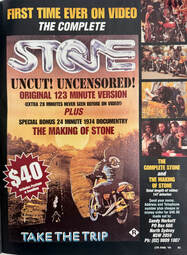
Scenes exclusive to the original theatrical version were generally unavailable commercially until they were included as a special feature on the Umbrella Blu Ray release in 2021; however, in 2000 Sandy Harbutt advertised 'First Time Ever On Video' the complete uncut and uncensored original 123 minute version + the special bonus 24 minute 1974 documentary 'The Making Of Stone'. The Directors Cut remains the primary version in circulation and the advertised 'uncut and uncensored' version of Stone has rarely been seen after its initial theatrical screening.
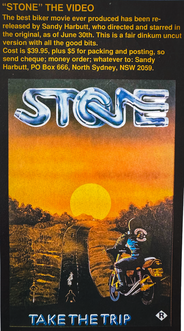
'In response to innumerable requests, I have decided to release this complete version of STONE on video to commemorate the first screening in twenty years of the original picture, at the Bathurst Easter Motorcycle Festival on Friday 21 April 2000. This video is taken from a used 35mm print, stored by The Natlonal Film and Sound Archive and has some picture scratches and some soundtrack noise'.
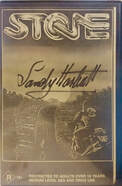
Complete version of Stone 2000.
In response to innumerable requests, I have decided to release this complete version of STONE on video to commemorate the first screening in twenty years of the original picture, at the Bathurst Easter Motorcycle Festival on Friday 21 April 2000. This video is taken from a used 35mm print, stored by The National Film and Sound Archive and has some picture scratches and some soundtrack nolse. However, the film Is complete apart from the following moments, lost due to print damage.
At 31 minutes: The line from STONE to INSPECTOR HANNIGAN: "So that's the choice is it Inspector - the bush or a paraplegic ward?" At 46 minutes: 15 second sequence: STONE kickstarts his Norton and rides up to Septic. STONE: "Good morning". SEPTIC: "Follow me"- SEPTIC rides down the road followed by STONE.
Running time on video is 2 hours and 3 minutes. SANDY HARBUTT. Producer, Director, Writer, UNDERTAKER. April 2000. Also Included at the end of STONE is THE MAKING OF STONE shot in 16mm Black & White with colour Inserts from STONE. Directed by Brian Trenchard-Smith, Music is by Billy Green and the Narration by john laws. RunnIng time of THE MAKING OF STONE Is 24 mlnutes. Total length of video: 2 hours 27 minutes.
At 31 minutes: The line from STONE to INSPECTOR HANNIGAN: "So that's the choice is it Inspector - the bush or a paraplegic ward?" At 46 minutes: 15 second sequence: STONE kickstarts his Norton and rides up to Septic. STONE: "Good morning". SEPTIC: "Follow me"- SEPTIC rides down the road followed by STONE.
Running time on video is 2 hours and 3 minutes. SANDY HARBUTT. Producer, Director, Writer, UNDERTAKER. April 2000. Also Included at the end of STONE is THE MAKING OF STONE shot in 16mm Black & White with colour Inserts from STONE. Directed by Brian Trenchard-Smith, Music is by Billy Green and the Narration by john laws. RunnIng time of THE MAKING OF STONE Is 24 mlnutes. Total length of video: 2 hours 27 minutes.

|
|